Key takeaways
- Double-hung windows slide up and down and tilt in to clean.
- Casements crank open and seal tightly when closed.
- Sliders glide sideways and suit wide, low openings.
- Most homes use a mix of styles.
Double-hung
Two sashes slide vertically, and most tilt in for cleaning. They suit traditional homes and nearly any room.
Only half of the window can be open at once, which is fine for most uses.
Casement
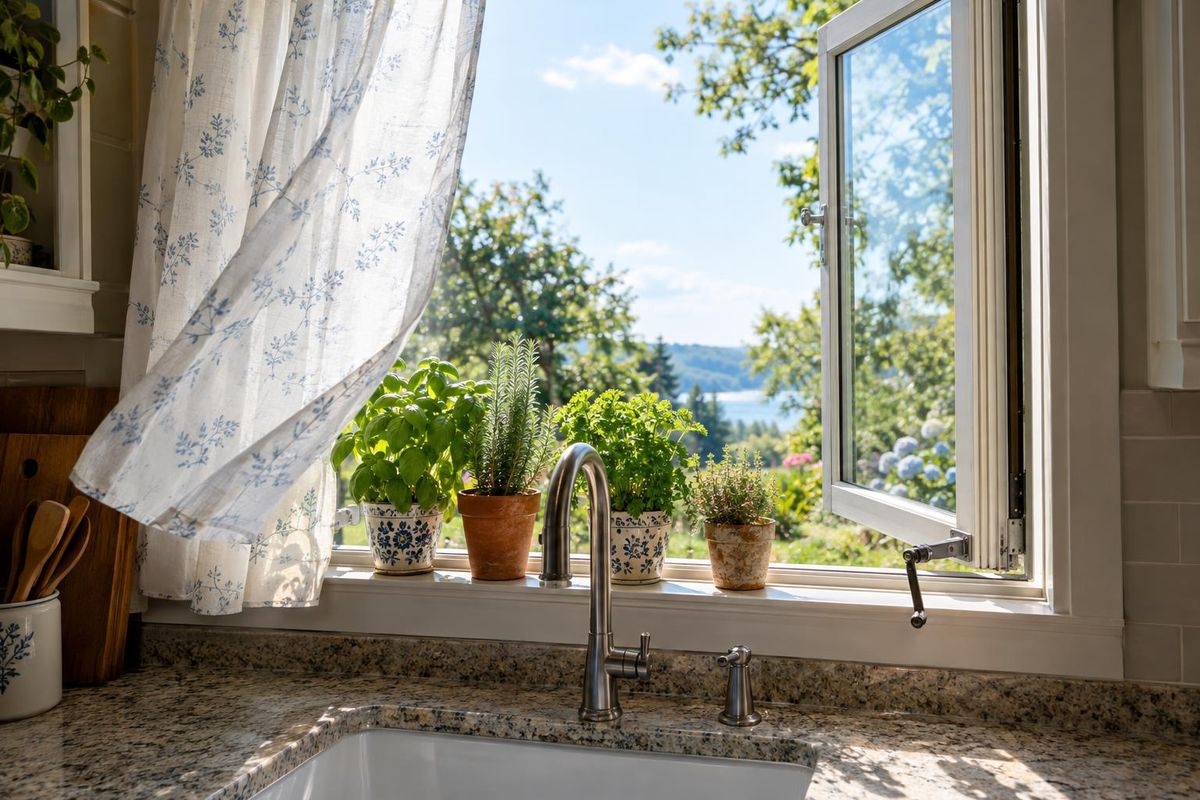
A casement is hinged at the side and cranks open outward. It can open fully, catches side breezes and seals tightly.
It needs clear space outside the window to swing, and it is easy to operate over a counter or bed.
Slider
A slider has sashes that move sideways in a track. It suits wide, short openings and needs no swing space.
Tracks need occasional cleaning to keep them gliding.
Choosing between them
Think about the opening shape, what is near the window inside and out and how you use the room. A wide, low opening suits a slider, a kitchen sink suits a casement and a bedroom suits a double-hung.
Homeowners in Nashville and across Middle Tennessee often mix styles to match the look from the street.
Quick answers
Which style is best for airflow?
Casements can open fully and catch breezes, while double-hungs offer top and bottom venting.
Which is easiest to clean?
Tilt-in double-hungs and casements are both easy from inside.